lunes, 20 de junio de 2016

The Wall: Activity

1-The masks represented the loss of identity because they covered up the faces of each one of the children making them all the same due to the fact that the face of someone is a clear representation of identity and differentiation.


2-I think what the explanation for the scene is to show what this kid thinks about education, as it say “teachers, leave the kids alone”, showing how oppressed kids where at that time. And taking into account the riot, in my opinion what it tries to show is what is insides that kids mind, and, to put it in one way, what his dream is.


3- the movie portrays a really tough and strict education. Children are forced to do certain kinds of activities, punished and mocked for being creative


4-The main social institutions that appear in the movie are Family and the Army. First, the family of the main character, Pink, is small, since he is the only child, as well as the fact his father died in the WW2. When he talks about the mother it said that she will put all of his fear on you, which shows how bad family can make to someone. Second, the Army is show as weak, since it’s a scene in which it shows all the dead corpses in a trench, and if we take into account the people that oppress people in the last of the scenes as the army we can say that they are also oppressors.


5- in my opinion a education is the base of everything. If there is good education I'm sure crime rate's will be lower compared to somewhere with low educational standards. The song "another brick in the wall" may claim education is not necessary, but I consider that only some types of educational
strategy aren't needed. For example, the type that we see in the movie is completely unnecessary, we don't need teacher to tell us how to be or how to think; we don't need to be all the same or to be "just another brick in the wall". We are supposed to be more that that: creative, thoughtful, unique. We don't need an education that pushes us to be someone we are not, we need one that teaches us values and that lets us be who we are by guiding us to a bright future.


6- School is a place where children are supposed to learn and be taught how to behave; this is a necessary thing for society. However there ir a fine line between teaching and imposing knowledge. Teachers are supposed to give tools for children to express themselves, be creative and learn through that, also to create their own opinion on some matters. But sometimes information can be imposed on a child's mind, they are pushed to believe they have to be or behave on a specific way, maybe even pushed to stop being like themselves and start acting like others, sometimes education makes children stop thinking by their own and start repeating what they have been told, this is thought control.
 I'm not saying education is not necessary, but it can be negative if it isn't managed correctly.


7- Soldiers are closely and strictly controlled: how to behave, how to think, who to support. This is what the double hammer symbol represents, soldiers that are mind-controlled just like students. We
see them on the "in the flesh" scene walking on a straight line, all the same and perfectly aligned, this shows how they are pushed to be in a certain way, like a perfect citizen that is just the same as the one next to him: there is no creativity nor imagination.


8- The metaphor describes how all children are “melt” and turned into the same thing, losing their individual identity and creativity at school. Moreover, it portrays how they are destined to become the same in order to help their country.


9- From our point of view the Wall is everything that sets you boundaries, that limits you. And even though it might have some good aspects, such as knowing what society says its good or not, it has more negative effects. You may disagree with society. Society might be completely wrong. Society might push you down. Sometimes you mustn't hear society at all, and it is there where innovation, vanguardism and many artists are born from.

lunes, 6 de junio de 2016

Alliance Française


       Le Mardi 17 Mai nous sommes allés à L´Alliance française. L’Alliance était extraordinaire et ancienne à l'extérieur mais très moderne à l'intérieur.
Nous sommes allés à la médiathèque, nous avons fait des activités avec les livres, les CD, les DVD et les VD. Il y avait beaucoup matériels anciennes. La médiathèque était grande et magnifique avec beaucoup technologies.
 Après nous avons visité une salle de classe pour regarder les vidéos éducatives avec la coordinatrice. On a eu une classe de compréhension de l´orale et on a répondu des questions.
Plus tard, nous avons obtenu un souvenir avec un stylo et un magazine. Après nous sommes retournés au collège.

domingo, 8 de mayo de 2016

Wrongful conviction: Ronald Cotton

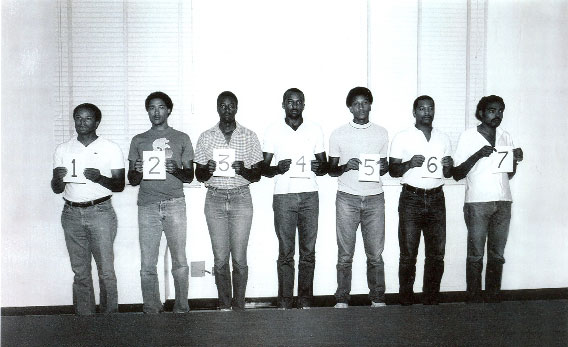
      One dark nigh of July 1984 Jennifer Thompson Canino was sexually assaulted on her own apartment. After the episode occurred she managed to escape from the assailant and ran into a neighbours home where she called the police. During the attack Jennifer did great effort to try and remember as much details as possible hoping she would survive and afterwards provide this information to the police in order to help them catch and imprison the criminal. That night the assailant not only raped Jennifer, but also another college student.
      After she made the complaint to the police, they presented a photo line-up so that Jennifer could identify the criminal who assaulted her. She chose the picture of Ronald Cotton and this is how his nightmare began. Following the photo line up, the live line-up came, and Jennifer again identified Cotton as her rapist and argued she was absolutely sure she caught the right person. Also some evidence was found where Cotton's shoes seemed to match the criminal's footprints on the apartment plus the fact that Ronald owned a flashlight that looked similar to the one the assailant seemed to have used. The police chose to believe Jennifer's arguments.
      Months later on January 1985 Ronald Cotton was convicted by a jury on one count of rape and one of burglary; two years later he was convicted for both rapes and sentenced to life in prison. Ronald Cotton along his group of lawyers tried to appeal and failed several times, though he never lost his faith, he was innocent and he wanted to prove it.
      Finally in 1995 the Burlington police department once and for all turned over the whole evidence; this included a semen sample of the assailant. The sample was tested and it turned out not to be a match of Cotton's DNA, beyond any doubt he was innocent. In July 1995 he was cleared of all charges.
     Ronald Cotton served ten years and a half in prison for wrongful conviction.  Posterior to his liberty, he managed to live a normal life, got married and had a child. Additionally he received $ 110.000 u.s from the state. Nowadays Jennifer and Ronald are good friends since she arrange a meeting with him in order to apologise where Cotton admit to her he had forgiven her long before during his time served because he understood it was all an unjust misunderstanding. Now they are both traveling the world together in order to spread the word about wrongful conviction and the problems regarding eyewitness identification procedures and the reforms that need to be made in order to avoid this kind of mistakes that can genuinely ruin someone's life.

jueves, 28 de abril de 2016

Mitiguemos el daño que causamos al planeta


Mitigar se suele definir como la acción de moderar, aplacar y suavizar algo; en el aspecto ambiental esto refiere a reducir el impacto que generamos en el planeta. Por ejemplo en muchos países se implementó un proceso de mitigación respecto al efecto invernadero. El objetivo es reducir la emisión de gases que se producen para así disminuir el daño que estos producen en el medio ambiente. También se puede mitigar el daño que causan las catástrofes naturales: Aunque es imposible evitar que ocurran, al menos podemos ser preventivos y “suavizar” los daños que pueden ser causados por temblores por ejemplo; construyendo edificios resistentes especiales para ciudades o países que suelen sufrir este tipo de acontecimientos. Incluso evitar el uso excesivo de autos o de transporte público cuando no es necesario; en distancias cortas podemos simplemente caminar o usar la bicicleta: Solo con eso ya disminuimos en gran parte la contaminación que generamos todos los días.
La mitigación es una forma de protección de los bienes, los recursos naturales, la vida humana y el planeta. Todos podemos contribuir con esta causa ya que no solo es necesaria la acción de un gobierno o del estado, sino que es necesaria la acción de la sociedad y de cada individuo; ya que cada uno aporta su granito de arena y todos en conjunto podemos generar un gran cambio y así cuidar a nuestro planeta.

lunes, 25 de abril de 2016

Questioning Expertise Credibility

   Expertise is a specialist knowledge and skill on a particular field which requires training and experience on it. A professional can be an expert on a particular field of it's work, for example a lawyer on family law or a doctor on surgery. Usually experts are consider highly credible compared to non-expert people, of course in their particular field of expertise. However there are various aspects in which we can rely to question the credibility of experts. Items A, B, C, D and E show some examples in which expertise was not very reliable.
    To begin with in item A we can focus on expertise as harmful in the medical area. Ivan Illich states that medical establishments can became a threat to population's health, they focus on treatments on how to fix people's problems but the main factors that affect health are housing, hygiene, diet and working conditions. By diagnosing and treating the illness, doctors seem to obscure what the real problem and it's source; they divert the attention from preventing the illness and focus on "fixing" it.  We can find in item B a good example: Tuberculosis illness started to decrease long before the medical treatments started. This is so because the source of the problem is in the hygiene or housing or lifestyle, not in the treatment. It's true that the treatment cures the disease, but that is not the real issue, the illness can be prevented.
    Furthermore on items C and D we can see examples of changing expertise. It changes together with adjustments in society; values and knowledge change, and that influences expertise. Item C talks about an alleged disease called "Drapetomania", Dr. Samuel Cartwright discovered this "disease" which took place on black slaves, this was supposed as a mental disease that needed to be treated. But, actually as years passed and values and knowledge changed, doctors realised this was not actually a disease. Moreover on Item D we can see a similar example with the supposed "mental illness" of homosexuality. Not so long ago, doctors believed that gay people were sick and needed to be treated and could be cured. Nowadays we can clearly see that is not true, sexuality is just a matter of interest and attraction, not an illness.
   As a conclusion, experts may have seen homosexuality as a disease, just as "drapetomania" because of the values and studies of that moment, but this doesn't mean they were right. Expertise can be based on prejudice, it is too attached to the time and place and this affects it's credibility. Something can seem to be true at the moment, but will it still be true on the future?
 

miércoles, 20 de abril de 2016

Nuestra huella ecológica

El documental de National Geographic “La huella del hombre” muestra de forma explícita la “huella” que deja el hombre en el planeta tierra, es decir que muestra claramente el impacto y la basura que genera una persona promedio a lo largo de su vida. Los promedios son basados más que nada en estudios realizados en Gran Bretaña, pero nos permite tener una idea de lo que llegamos a consumir durante nuestra vida.
   Los seres humanos tienen necesidades básicas que deben satisfacer para poder seguir con vida, tales como comer, respirar, hidratarse, etc. Esto ya causa un impacto en el medio ambiente, solo el hecho de tener que alimentarse ya produce basura, mucho mayor es en la sociedad consumista de hoy en día. No nos basta con consumir lo necesario ni satisfacer las necesidades básicas, como siempre, debemos ir más allá de nuestros límites y por supuesto de los límites del planeta tierra.
     Cuesta creer que alguien genuinamente quiere destrozar el planeta, la mayoría de la gente es inconsciente o simplemente decide ignorar que tenemos un planeta que cuidar y que todas nuestras acciones repercuten en él. Como dijo hace muchos años Mahatma Gandhi: “Debemos ser el cambio que deseamos ver en el mundo”. Entonces si no queremos un mundo destruido, debemos dejar de ser negligentes con respecto al abuso de los recursos y la contaminación. ¿Queremos un mundo más limpio? Entonces debemos ser más limpios. Nada en este mundo es generado por arte de magia. Creamos y desechamos cosas que no desaparecen así como así, el proceso de degradación puede tomar muchísimos años en producirse y antes de que eso ocurra la tierra, el aire y el agua ya fueron contaminados.

  Debemos cuidar el medio ambiente, debemos ser responsables. No podemos ignorar el impacto de nuestras acciones, la huella que dejan nuestros desechos porque eso afecta al lugar en donde vivimos. El planeta tierra es nuestro hogar y debemos cuidarlo así podemos mantenerlo limpio y sano para nosotros y para las futuras generaciones.

jueves, 14 de abril de 2016

Transcripción y traducción del ADN

A continuación dejo el link hacia unos videos de Educatina, explicando clara y brevemente los procesos de transcripción y traducción del ADN.

Proceso de transcripción


Proceso de traducción